Showing posts with label National Conflicts. Show all posts

June 27, 2011

When Franco Saved Spain

In 1936 General Franco led an armed uprising against the communist Spanish government, ending years of terror in the streets. The war was portrayed in the West as a struggle between the dispossessed on one side, and tyrannical Fascists on the other side who fought for no other reason than greed. The truth is very different.

Spanish General Francisco Franco in Africa

The Spanish Left

Between 1931 and the commencement of the civil war, more than one thousand Catholic Churches had been destroyed by communist parties and organizations. Numerous priceless works of art and historical monuments were torched and leveled, along with convents, hospitals and colleges. The communists in Spain were above all motivated by anti-Christian rhetoric, more so than anywhere else. The terror campaign was the usual tactic for pacifying a country before a communist takeover, used in places like Russia, Hungaria and later in Cuba. This campaign was aided by the approval of the socialist governments from 1931 to 1936. The Spanish Socialist Workers' Party (PSOE) that came to power in 1931 declared that it had “successfully incorporated the revolution within the government.”

Republican/communist war poster: “All the peoples of the world are in the International Brigades on the side of the Spanish people
In 1933 Spain was led by the Radical Republican Party, which was considered “centrist” in that it didn’t want an immediate overthrow of the monarchy. It became dependent on the votes of the large conservative party, the Spanish Confederation of the Autonomous Right (CEDA) in parliament. At this time Francisco Largo Caballero, the former socialist Minister of Labor Relations, began talking about a “socialist revolution” to overthrow the elected government. He became the leader of the communist faction in the PSOE, and also leader of the communists within the Workers’ General Union (UGT), where he was the chairman.

Both the PSOE and its closely allied labor union began marching in the streets with demands for revolution. Caballero spoke openly about a “socialist revolution”  and making himself the “second Lenin” in a “union of Iberian Soviet republics.” This seemed to indicate a desire for control not only of Spain but also Portugal, the only other nation in the Iberian peninsula.

Caballero defended the party’s alliance with the Communist Party of Spain (PCE) and the anarchist, Trotskyist trade union, CNT. All these groups together with other social-democratic and communist parties came to power through elections in 1936 in the Popular Front coalition, with Caballero as the prime minister. 

At this time the government could often do little more than acknowledge the actions of radical forces. The communist parties and trade unions had first been welcomed by Caballero as muscle in the streets, but they now became an independent force.


The Spanish Right

The Right also had many factions, such as the Carlists, the Falange, the Monarchists, and followers of Francisco Franco, a general in the army who was not well-known at the start of the civil war. Nevertheless Franco was responsible for uniting much of the Right, without the purges and murders employed by the Left.

The Right’s ideal was one of normal, traditional Spanish life. What united the Right was an opposition to the Left’s plans for a new Soviet republic. Their modest political ideas can be seen in this part of a message to Spanish women:

In these grave moments for the country, your way of life cannot be that of frivolity, but austerity; your place is not in the theatres, the paseos, the cafés, but in the church and hearth. Your ornaments cannot be inspired by the dirty fashions of Jewish France, but the modesty and pudeur of Christian morality… your duty is not to procure for yourself an easy life, but to educate your children, sacrificing your pleasures and helping Spain.

In 1936 Francisco Franco was chief of staff of the military and also governor of the Canary Islands. Seeing the terror spread in Spain, not only supported but carried out by the government itself, he decided to act. He declared a revolt against the government which also won the support of the military in Spanish Morocco and various military units in Spain itself.


Seeking aid outside the country, Franco saw that Britain, France and the U.S. would never support any action against the communists. They had allowed the communists to take control of Russia, and had done nothing when the Jewish communist Bela Kun took power in Hungaria in 1919. Nor had they acted when the Soviet Union prepared to invade Romania together with Hungaria that same year. They seemed to tacitly support the communist terror and riots that were spreading throughout European countries in the post-war years.

Instead Franco turned to Italy and Germany for help, and he personally wrote a letter to Herman Göring, head of the German air defense, for military support. Both Italy and Germany approved his request and sent troops to Spain.


Communist Killings

In 1936, tens of thousands of Catholics were being killed in Spain, buried in mass graves. The communists were especially anti-religion, and killed all priests, monks and nuns they could capture, as well as anyone with a connection to them. A total of 85,940 “reactionaries” and “fascists” were shot, burned, buried alive, pushed off cliffs, thrown down mineshafts, and murdered in other ways in Red Spain. 7,937 of these were Catholic clerics, including 283 nuns, many of whom were raped first.

Many were tortured to death slowly. The communists used the name “Cheka” for themselves, the same name as the security police in the Soviet Union (later the KGB) that sent more than sixty million Russians to die in the Gulag system. The communists welcomed the Spanish communists; both Lenin and Trotsky had predicted that Spain would be the next Soviet Republic.

This has been completely ignored by the media. Archbishop Romero of San Salvador was killed by “right-wing” gangsters in 1980 and it was published all across the West; but after thousands of clergy were slaughtered in Spain, Paramount Pictures made For Whom the Bell Tolls with Gary Cooper and Ingrid Bergman, glorifying the murderers. This is understandable when you know that Paramount Pictures is run by Jews, not Christians.

This didn't stop the Western Left from supporting the communists. 3,000 Americans, many of them members of the Communist Party USA or linked to it, formed the “Abraham Lincoln Brigade” and went to fight in Spain. These were praised by the media as fighting for democracy. The communist side was dubbed the Loyalist side in the press, a word with positive connotations.

 
Guernica

While the media owners are silent about the tens of thousands executed by the communists, the bombing of Guernica in 1937 is always mentioned in connection to the Spanish Civil War. School textbooks and documentaries alike name it a terror bombing of a peaceful Basque village, killing innocent civilians. The pro-communist Pablo Picasso made a “modern art” painting of the event which is hailed as a great masterpiece.

The story is completely false. It was cabled out by the Comintern communists and picked up by their allies in Western and Soviet media, but the truth was buried. The Nationalist side, aided by the German military, did bomb Guernica, but it was because the town had an arms factory, a railroad yard, and it was a major crossroads for the Red troops. It was thereby a legitimate military target – far more legitimate than, for example, the Allied fire bombing of Dresden, a city of no military significance, toward the end of World War II. There were civilian casualties in the bombing, but most of the damage to civilian areas was done by dynamite and arson on the ground carried out by the communists before they evacuated. This was done so that the bombing of Guernica could be used for propaganda.

Howard Cardozo, a reporter from London’s Daily Mail, was with Franco’s troops at the time and visited Guernica, interviewing the residents. When he reported on the event, his story was stopped in London. It was never carried by any other newspaper. This was also documented in Spain: the Vital Years by Luis Bolin, and the National Review magazine devoted most of an issue in the 1960s to the hoax. Likewise, Herbert R. Southworth explored how the Guernica story had been falsified for propaganda purposes in his book Guernica! Guernica! Diplomacy, Propaganda and the Press, University of California Press, 1977.

The Comintern version, however, was published by the New York Times within days. It is worth noting that their man in Spain was none other than the journalist Herbert Matthews, the same man who twenty years later would report from Cuba about “thousands of dead” communist soldiers, and later about the glories of the communist dictatorship.


The POUM

Interestingly, the communists not only massacred Catholics but also turned on each other. As George Orwell described in his book Homage to Catalonia, the Workers’ Party of Marxist Unification (POUM) was a Trotskyist party that opposed Stalinism and the Soviet Union. It eventually grew larger than the official Communist Party of Spain, PCE, which became strongly hostile toward the POUM due to its opposition to the Stalin-led Comintern, of which the Popular Front was a part. (The POUM took part in the Popular Front in order to win the 1936 election for the Left, but only reluctantly.) The POUM was soon attacked both by communist groups and by the government, as recounted by George Orwell:

At the Red Aid centre on the corner of the Plaza de Gataluna the police had amused themselves by smashing most of the windows. … Down at the bottom of the Ramblas, near the quay, I came upon a queer sight; a row of militiamen, still ragged and muddy from the front, sprawling exhaustedly on the chairs placed there for the bootblacks. I knew who they were--indeed, I recognized one of them. They were P.O.U.M. militiamen who had come down the line on the previous day to find that the P.O.U.M. had been suppressed, and had had to spend the night in the streets because their homes had been raided. Any P.O.U.M. militiaman who returned to Barcelona at this time had the choice of going straight into hiding or into jail--not a pleasant reception after three or four months in the line. … The streets were thronged by Civil Guards, Assault Guards, Carabineros, and ordinary police, besides God knows how many spies in plainclothes; still, they could not stop everyone who passed, and if you looked normal you might escape notice.

Beginning in 1937, communist government agents began murdering, arresting and torturing the POUM leadership. Such was the situation for other communists. The situation for those who opposed the communists was much worse.


The End of the War

In October 1936, Francisco Franco was appointed generalissimo of Nationalist Spain and head of state. The war nevertheless went on until 1939, with the Nationalists scoring increasing victories as the people abandoned the communists, who also fought among themselves. In February 1939 Franco’s government was recognized as legitimate by Britain and France, and recognition by America followed in August the same year.

Under Francisco Franco, rule of law was restored to Spain as the communist terror was ended. Spain would remain neutral during World War II, to a large degree because it lacked the military strength to take part and would no doubt have been invaded by Britain. The defeat of the Spanish communists had nevertheless prevented that the Mediterranean became dominated by the Soviet Union.

Franco’s rule was called “Fascist” by the Left, but it would be more accurate to describe it as authoritarian conservative. The truly Fascist part of the Right’s coalition, the Falange which fought in the civil war, was not brought to power by Franco.

Spain prospered and became one of the largest economies in Europe – certainly far larger than the Soviet economy, the GDP of which eventually ended up being lower than that of Belgium. In 1969, Franco named Prince Juan Carlos de Borbón, who was educated by him, as his successor, on condition that he preserve the Nationalist government. By 1973, Franco resigned from the post as prime minister and remained only as head of state and commander in chief of the military. He died in 1975. Juan Carlos the Borbón then became head of state and immediately broke his promise, handing over power to a democratic regime. The story about the civil war in Spanish history textbooks was changed to the version promoted by the Left outside Spain. In 2007, under pressure from the European Union, the Spanish government banned all public references to Francisco Franco’s government and removed all associated statues, street names, memorials and symbols.

June 15, 2011

When Pinochet Saved Chile

Augusto Pinochet took power in Chile on September 11, 1973, when Congress called upon the army to save the country from the pro-communist Allende government.

General Augusto Pinochet

The Allende Years

Salvador Allende won the presidency in a three-way race in 1970 with only 36 percent of the votes. He declared that “Santiago will be painted red with blood if I am not ratified as President,” and as soon as he was ratified he began destroying the constitution.

Allende set out to take control of the country’s industry, taking hundreds of businesses from their owners without compensation. He seized land and more than 1,500 farms. He centralized education and filled the schools with Marxist propaganda. He inflated the money supply, printing more and more money to pay for his projects. He gave out welfare to his political friends. He crashed the entire economy, and Chile came to suffer from massive debt, default, 140% inflation, empty grocery stores, and a revolt by every property owner and business interest in the country. People had nothing to eat.

Fidel Castro and Salvador Allende
The Chilean courts denounced Allende’s breaking of the law, and Allende responded by refusing to enforce more than 7,000 court rulings. Criminals were set free with no consequences for their actions. Chile soon became a haven of crime, run by gangs and communists swarming over the country from all over South America.

Following the industrial collapse, the country was filled with an army of illiterate peasants preparing to fight against the “capitalists” the government told them were behind the destruction of the economy. Fidel Castro’s embassy in Santiago swelled to a staff of 1,000 people ready to assist in the coming communist takeover. 

Peasant Allende supporters
Under Allende, the Chilean Communist Party sent its members to Cuba to receive training in guerrilla warfare. Cuban officers followed them back to Chile as military advisors to the communists. Guns, explosives and ammunition were smuggled in from Cuba. This smuggling operation was protected from high up in the Allende government. In the streets, the communists were doing what they always do before a takeover: beating up shopkeepers, vandalizing and looting stores, attacking political opponents, attacking anyone who wore expensive-looking Western clothing, and generally terrorizing the populaze to break their will to resist. They began a terror campaign of assassinations and bombings.

Salvador Allende and Fidel Castro

Protesting Women

Housewives who couldn't feed their children started demonstrating. In the March of Empty Pots in 1971, more than 5,000 housewives marched in Santiago, banging empty pots and pans to show they had nothing to fill them with. The unarmed women were attacked by communist gangs. Other youths, many the sons of the women in the march, then came to their aid, fighting the communists. When the police arrived, they aimed their water cannons and tear gas mostly at the women.

Chilean women now began urging the army to revolt against Allende. For the army's reluctance to do so, women threw chicken feathers at military parades (telling the soldiers they were chickens). The women formed the organization Feminine Power, which came to play a significant role in resisting Allende's actions. It was the largest political activism by women to ever take place in Latin America.

When hearing of the March of Empty Pots, feminists in the West dismissed the women with contempt, since they were mostly middle class and upper class, and therefore must be lying in order to make Allende look bad. When feminists talk about women taking a role in Latin American politics they always ignore the March and the role Chile's women played in urging the military to revolt. In her book Right-Wing Women in Chile (Pennsylvania State University Press), leftist professor Margaret Power describes interviews with women all across Chile, who told interviewers of their struggle. Margaret Power dismisses them outright. They are either lying or they only think they remember correctly; their memories have been distorted by right-wing propaganda, she says. She also says these women exploited the wishes of women to be more active in politics.

Men and women vote separately in Chile, and it is therefore possible to see that even working-class women voted more for conservative candidates than working-class men did. According to Margaret Power, this is simply the result of middle-class women exploiting working-class women's wishes for sewing machines (no small thing at the time) and other material improvements.

They were women, they were active in politics, they opposed a totalitarian regime. But they were Right, not Left. So today they are forgotten.


Veteran women supporters of Pinochet, 2000

The Congress Censure

Three years into Allende's presidency, on August 22, 1973 the Chilean Congress censured Allende for violating law and the constitution in order to “establish a totalitarian system absolutely opposed to the representative system of government established by the Constitution.”

Allende was censured for “making violation of the Constitution and the law a permanent system of conduct,” and for “systematically trampling the powers of the other branches of government,” while at the same time “violating the civil rights of the citizens guaranteed in the Constitution and permitting and stimulating the formation of illegal parallel powers which constitute a grave threat for the nation.”

These illegal armed groups “intend to replace legitimately constituted powers and serve as a base for the dictatorship of the proletariat.”

In other words, Allende’s rule was that of a criminal organization, while aiding in the formation of communist guerrillas.

Allende now was unable to find majority support in the Congress, but he had other plans for staying in power. According to documents found in the presidential palace after the coup, Allende was planning to massacre his conservative military opponents and some 600 politicians, journalists, and conservative opposition members by the end of 1973.

Not surprisingly, the Congress supported the military’s coup as a way to save Chile. In fact, their August 22 censure of Allende called for the military to save the country – the military was acting on behalf of the elected Congress. On September 11, the military threw out Allende, then went into the towns and cities and arrested the gangs operating there.

Allende with the Soviet-made AK47 thought to have been used in his suicide 1973

General Pinochet Takes Power

General Augusto Pinochet took power and defeated the communists. According to the Rettig Report of 1991, Pinochet’s struggle against the communists resulted in 2,300 (both sides) dead and missing. Some claim it was 3,000 dead. Many of these were foreigners, drawn to Chile at the prospect of taking part in a communist takeover.


The left-wing media in the West hated it; they had watched with approval the preparations for another communist dictatorship. (The same media who had never said anything about the 20,000 executed in Cuba, and the hundreds of thousands of Cubans put in concentration camps.) They now started hating Pinochet with a force reserved for Hitler and anyone else who stands in the way of communism. Suddenly publishing the violence in Chile was allowed – now that it wasn’t the Left committing it.

The military was brutal in its suppression of the communists. It was South America after all, the home of Indian-Spanish latinos. But there is no moral equivalency. Communists killed more than 60 million people in Russia, they massacred the Polish elite in the Katyn Massacre, they raped more than a million women after WWII, they killed 20 million people in China, and they killed a third of Cambodia’s population. To name a few of their crimes. Chile was facing yet another communist plan for taking over a nation, complete with terrorist bombings of the infrastructure, and these terrorists were met with a deserved response.

The Left propagates some fantastic eyewitness accounts, such as bodies being thrown overboard from ships on the Mapocho river that runs through Santiago. As Paul Craig Roberts has noted, anyone who has seen this “river” knows that it is not navigable. This is the same strategy the Left has always used for armed conflicts. In regard to Cuba, they had talked of thousands of dead in battles with Batista’s government, and claimed that the economy was run by the Mafia, none of which was true. (There were 182 dead, both sides put together.)


Chilean Prosperity 

One thing the Left will not mention is that Pinochet had strong support from the Chilean people and Congress. Under Pinochet, Allende’s economic disaster came to an end. The economy was repaired and the nation prospered. Pinochet lowered tariffs, privatized large portions of the health care and social security systems, and re-established rule of law in the economy. Pinochet allowed back the investors from America and other Western nations, whose skills Chile sorely needed. The stores filled with food again.

Pinochet never planned to be dictator for life. He created a strong constitution and from the beginning made plans for future elections. When he had left power after seventeen years and allowed his enemies back to the political game – something the communists would never do voluntarily – Pinochet still had strong support among the people. Chileans then had one of the highest living standards in Latin America.

Augusto Pinochet and Pope John Paul II, 1987. Under Allende, Catholic churches were bombed by the communists.
As a way to promote reconciliation in Chile, both the remaining members of left-wing terrorist groups and the military were given amnesty. The military government kept the amnesty, but successor governments did not. In his old age Pinochet was harrassed by vengeful leftists, determined to overturn the amnesty for Pinochet – but not for the terrorists.

Pinochet supporters after his death in 2006
Augusto Pinochet died of old age, 91 years old, in 2006. Today government corruption is once again on the rise in Chile and constitutional restraints are assaulted, as the Left creates voting blocs dependent on government welfare in its usual strategy for holding power. Should the Left succeed in once again overthrowing the rule of law in Chile, the hard-working, job-creating, industry-building middle class that is the basis for any country’s prosperity will be under threat. If the Allende government showed anything it is that worshipping democracy as an end in itself – Allende came to power democratically after all, with 36 percent of the vote – is a dead end. It is not democracy that builds a nation’s prosperity, but the productive middle class.

Chilean Pinochet supporters in a march in favor of their former president
Indian Pinochet supporter


Leftist demanding Pinochet's immunity be lifted, 2006, a few months before his death at 91 years of age

Leftists rioting at Pinochet's death

June 13, 2011

Ernesto Guevara, Stalin II

Let us consider some facts about one of the Left's major icons.

Ernesto “Che” Guevara was the second in command, chief executioner, and chief KGB liaison for the Cuban dictatorship. The police he controlled was KGB-supervised, and they jailed more political prisoners as a percentage of the population than Stalin. They stole the savings and property of 6.4 million citizens and made refugees of 20 percent of the population. Not a single family went untouched by the regime’s executions, jailings, theft and torture.

Ernesto Guevara had been a communist operative in Guatemala when Jacobo Arbenz was overthrown by his own army and fled behind the Iron Curtain, to Czechoslovakia. He would not let this happen in Cuba, so he started killing Cuban officers in the thousands after the communist takeover. As his surviving prisoners reported, he seemed to greatly enjoy killing bound and gagged victims. This was probably the only thing he could do without making mistakes; as Minister of Industry he was a disaster, destroying the country's prosperous economy, and as a commander he never had any success in battle. As a revolutionary strategist he rode on Castro's coattails, but failed when on his own in Congo and Bolivia.

Despite many attempts, no one has ever been able to find any records of Ernesto Guevara’s medical degree. In fact, when he was captured in Bolivia, Guevara told Captain Gary Prado that he was not a doctor, but “had some knowledge of medicine.”


Guevara liked to sign his name "Stalin II"

In 1959, Guevara eagerly accepted a suggestion by Soviet agent Angel Ceutah. Every candidate for officer, suggested Ceutah, would take part in a firing squad and pull the trigger. This way they would all be guilty of murder and therefore had to be loyal to the communist dictatorship, for if it would fall they could face prosecution.

As soon as he came to Havana, Ernesto Guevara stole and moved into what was probably the most luxurious mansion in Cuba.

He boasted: “We execute from revolutionary conviction!” He said: “Judicial evidence is an archaic bourgeois detail.”

The only GOOD commie is a DEAD commie

Edwin Tetlow, Havana correspondent for London's Daily Telegraph, reported on a mass “trial” orchestrated by Che Guevara where Tetlow noticed the death sentences posted on a board before the trial had started.

Guevara often signed his name as “Stalin II.” He claimed that “The solutions to the world's problems lie behind the Iron Curtain.” He proposed that “If the nuclear missiles had remained [after the Cuban Missile Crisis] we would have fired them against the heart of the U.S. including New York City.”

"Today I discovered I really like killing."

 He also professed that the victory of socialism was well worth “millions of atomic victims.”

What about his reputation as a cool revolutionary youth icon? In a 1961 speech, Guevara denounced the very “spirit of rebellion” as “reprehensible.” “Youth must refrain from ungrateful questioning of governmental mandates,” he commanded. “Instead they must dedicate themselves to study, work and military service.”

The youth “should learn to think and act as a mass.” While “those who choose their own path” were accused of being “lumpen,” “anti-social” and “delinquents.”

He then went on and swore “to make individualism disappear from Cuba! It is criminal to think of individuals!”

He cheered the Soviet invasion of Hungary in 1956 and the slaughter of thousands of Hungarians who resisted the Soviet Union. He said they were all “fascists and CIA agents.”

“Dear Papa, today I discovered I really like killing,” Guevara had written in a letter in 1957. When Castro had brought him to power, Guevara told his interrogators: “always interrogate our prisoners at night. A man’s resistance is always lower at night.”


As the main KGB liaison, Ernesto Guevara welcomed hundreds of KGB and STASI “consultants” in the early 1960s. They found him to be an eager student. The crime of a “rocker” lifestyle, i.e. listening to rock n’ roll, or of being a homosexual or otherwise freaky, was enough for Guevara’s police to arrest thousands of youths in the streets and send them to labor camps. Most of those arrested were teenagers or in their early twenties. There, surrounded by barbed wire and towers with machine guns, they could read large signs such as “Work Will Make Men Out of You”. Anyone dressing like those attending Woodstock in 1969 would have been sent to one of these concentration camps in Cuba. So much for the “revolutionary” and “cool” Guevara worshipped by left-wingers.

Jean-Paul Sartre: "Che Guevara was the most complete human being of our age"

Guevara About non-Whites

Guevara didn’t think well of South American Indians, unless he could use them. He called the Bolivian Indians “animalitos,” little animals. He scoffed at Mexicans as being “a band of illiterate Indians.” He wrote of Blacks: “The black is indolent and a dreamer; spending his meager wage on frivolity or drink; the European has a tradition of work and saving.” (Those are Guevara’s words from his diaries, which Robert Redford based his Motorcycle Diaries on – but he left out that part.)

Fellow communist Sanchez recalled how Guevara constantly tormented the Black Cuban rebel, Juan Almedia. “Almedia would get furious! So finally I told him: look Juan, if Che keeps calling you ‘el negrito,’ turn around and call him ‘El Chancho’.” (“The Pig”; Ernesto Guevara hated baths as a “bourgeois” habit, as revealed by Sanchez in the documentary Che; Anatomia de un Mito.)

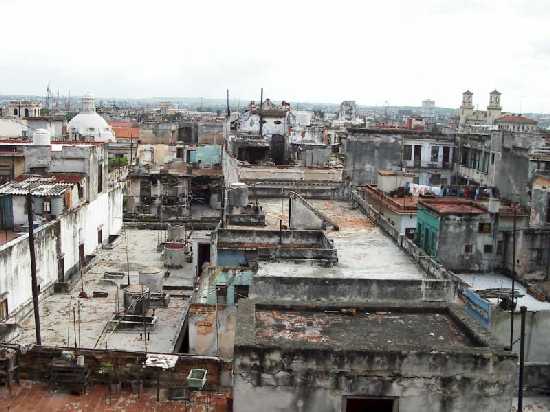
Havana, post-Guevara
Cuban Killings

A Cuban prosecutor who defected, Jose Vilasuso, estimated that Ernesto Guevara personally signed 400 death warrants within the first few months of command in La Cabana.

A Basque priest, Iaki de Aspiazi, who often gave prisoners last rites, says Guevara personally ordered 700 executions by firing squad in that time.

Cuban journalist Luis Ortega, who knew Guevara from 1954, wrote that Guevara sent 1,892 men to the firing squad.

Daniel James writes in Che Guevara: A Biography that Guevara admitted to ordering “several thousand” executions during the first year of the Castro regime.

I dont need proof to execute a man. I only need proof that its necessary to execute him.
Felix Rodriguez, a Cuban-American CIA operative who helped track down Guevara in Bolivia and who was the last person to guestion him, says that Guevara admitted to “a couple thousand” executions. But he shrugged and said they were all “imperialist spies and CIA agents.”

“Executions?” Che Guevara exclaimed while addressing the UN General Assembly on December 9, 1964. “Certainly we execute!” he declared. “And we will continue executing as long as it is necessary! This is a war to the death against the revolution’s enemies!” The UN General Assembly clapped and cheered.
“I don’t need proof to execute a man,” snapped Guevara to a judicial underling in 1959. “I only need proof that it’s necessary to execute him!”

Small photographs of the faces of Castro's and Guevara's victims, together forming the "iconic" Guevara poster
One day in early 1959 one of Ernesto Guevara’s Revolutionary Courts actually found a Cuban army captain named Pedro Morejon innocent of the charge of “war-criminal.” This outraged Comandante Camilo Cienfuegos. “If Morejon is not executed,” he yelled, “I’ll put a bullet through his head myself!” The court had to quickly reassemble and give a new verdict. Pedro Morejon was executed the next day.

Armando Valladares spent 22 years in prison camps, but fortunately escaped execution. He said of his experience: “Not one witness to accuse me, not one to identify me, not one single piece of evidence against me.” His crime was refusing to display a pro-Castro sign on the desk in his office.


Guevara’s failure in Congo and Bolivia

In 1965 Ernesto Guevara went to Congo in the hope of raising an army there. He left after a year, when the Africans proved impossible to organize, and even Guevara was disgusted by their savagery. In 1966 he went to Bolivia hoping to “create a second Vietnam.” He didn’t get it: Vietnam wasn’t the peasant rebellion leftist propaganda makes it out to be, it was a North Vietnam of 20 million people invading a smaller South Vietnam, supplied with guns and money from the Soviet Union and China. In Bolivia the Indians owned their land and saw Guevara not as a hero but as a threat. He was captured and killed after 11 months, when most peasants had refused to help him.

Meanwhile the Soviets had come to loathe him, and they withdrew support from his Bolivian Communist party. They used an undercover agent, Haydée Tamara Bunke, to report on him.

Former CIA officers have told of how Fidel Castro himself, via the Bolivian Communist party, constantly fed the CIA info on Ernesto’s whereabouts in Bolivia. He also instructed the Bolivian communists not to assist Guevara in any way; “Not even an aspirin” in case he had a headache. Fidel Castro was notorious for killing those who might be a threat to his own power. As many people around him have testified, “Fidel only praises the dead.”

Fidel said Not one aspirin in aid should be given to Guevara

When trying to overthrow the government in Bolivia, on his second-to-last-day alive Guevara had to face real combat, which he wasn’t used to. He couldn’t take it. He preferred to shoot at people who were bound and gagged. He ordered his guerrilla charges to spare no one and fight to the last bullet. While they did so, Guevara himself snuck away from the firefight and surrendered with a full clip in his pistol. He told his captors: “Don’t shoot! I’m Che! I’m worth more to you alive than dead!”

He then groveled shamelessly, trying to make friends among his captors: “What’s your name, young man?” “Why, what a lovely name for a Bolivian soldier!”

“So what will they do with me?” Guevara asked Bolivian Captain Gary Prado. “I don't suppose you will kill me. I'm surely more valuable alive ... And you Captain Prado, you are a very special person ... I have been talking to some of your men. They think very highly of you, captain! And don't worry, this whole thing is over. We have failed. Your army has pursued us very tenaciously ... now, could you please find out what they plan to do with me?"

Ernesto Guevara executed by the Bolivian military

The Truth About Cuba

Humberto Fontova has long pointed out the media falsehoods regarding the communist takeover of Cuba in 1958, one of the darkest affairs in Latin America. The communists are presented as heroes, life in Castro’s dictatorship is described as a paradise, and Cuba’s health care is described as free and fantastic. The government they overthrew is portrayed as oppressors controlled by the U.S. Mafia, supported by the U.S. government. None of which is true


The Cuban Economy

Cuba under President Fulgencio Batista in 1958 was a prosperous nation. Cubans had a higher standard of living, and earned more money, than half of Europe. Cubans had a higher standard of living than Ireland and Austria, and almost double the per-capita income of Spain and Japan. Cuba had more doctors and dentists per capita than Britain, and lower infant mortality than France and Germany – the 13th lowest in the world. All of this wealth was built from nothing, after a devastating turn-of-the-century independence war that had destroyed the economy and killed a quarter of its inhabitants.

Today Cuba’s infant mortality rate is the 24th highest.

In 1958, 80 percent of Cubans were literate. Cuba budgeted more than any other Latin American country, 23 percent of national expenses, for public education. Had Cuba been allowed to remain free from left-wing extremism, the remaining 20 percent of illiteracy would soon have been gone. Cubans would also be allowed to read and write freely. 

Yet Rupert Murdoch’s London Times talks about how Fidel Castro has “erased poverty” and created “literacy” in Cuba.

Left-wingers like to claim that Cuba was owned by American interests. In fact,  of Cuba's 161 sugar mills in 1958, only 40 were American-owned. United Fruit, the usual villain in leftist stories from this time, only owned a third of these. According to the U.S. Chamber of Commerce, in 1958 American investments in Cuba only accounted for 13 percent of Cuban GNP.

“44 per cent of Cubans a higher percentage than Americans are covered by social legislation,” starts a report on Cuba dated 1957. “One feature of the Cuban social structure is a large middle class. Cuban workers are more unionized than U.S. workers. The average wage for an 8-hour day in Cuba in 1957 is higher than for workers in Belgium, Denmark, France and Germany.

According to the Geneva-based International Labor Organization, the average daily wage for an agricultural worker was also among the highest in the world, higher than in France, Belgium, Denmark, or West Germany. Cuban labor received 66.6 per cent of gross national income. In the U.S. the figure was 70 per cent, in Switzerland 64 per cent.

According to a UNESCO report, before Castro, Cuban industrial workers had the 8th highest wages in the world. Cuba had an eight-hour work day in 1933, thirty years before the Social Democracies in Europe introduced it.

Yet within the first years of the communist takeover, with Ernesto "Che" Guevara as Minister of Industry, the economy was destroyed. The Soviet Union poured in the equivalent sum of eight Marshall Plans, but this could not raise Cuba from the poverty the communists created.


Mafia Control?

T.J. English wrote a book in 2008 called “How the Mob Owned Cuba, and Lost it to the Revolution”. This book sounds like something straight out of Castro’s propaganda ministry, and indeed, his primary sources are Cuban communist officials. The book's premise is that Cuba was a Mafia center, nothing but a big Mafia-controlled casino street. The view was also presented in the Godfather movie from 1972, where the Mafia is seen riding high in Cuba, while heroic rebels are prepared to die for freedom.

The truth is that Cuba's GDP in 1957 was $2.7 billion. Cuba's foreign receipts in 1957 were $752 million, of which tourism was only $60 million. The casino business was a small fraction of those 60 million. How could those operating in the casino business “own” Cuba’s much larger economy?

Another interesting statistic, showing the wealth of Cuba at the time, is that more Cubans vacationed in the U.S. than Americans vacationed in Cuba. They went to the casinos in Las Vegas and Tahoe – and the young men came for the prostitutes in New Orleans, who were cheaper than those in Cuba.

The media will talk about the Mafia in Bautista’s days, but they will never mention how Fidel Castro’s junta has made hundreds of millions of dollars in collaboration with the cocaine cartels in Colombia during the 1970s and 1980s. “We lived like kings in Cuba,” revealed Carlos Lehder and Alejandro Bernal, heads of the Medellin Cartel, during their trials. “Fidel made sure nobody bothered us.”


The Communist Takeover

Says historian Arthur Campbell in Guerrillas: A History and Analysis: “The Guerrilla war in Cuba was notable for the marked lack of military skills or offensive spirit in the soldiers of either side.” The “war” in fact only totalled 182 dead – on both sides. The Cuban communists took power more by bribing soldiers with Soviet money than by doing any fighting. Had American politicians been willing, they could easily have saved the Cubans from communist tyranny.

After the takeover, the communists killed 20,000 Cubans. A higher ratio of the population than Stalin killed in Russia. They jailed countless others for decades.

As mentioned before, the Soviets ended up pumping the equivalent of eight Marshall Plans into Cuba. And Cuba was not a war-ravaged continent of 300 million in 1960. It was a nation of 6.5 million whose citizens formerly earned more than those in Taiwan, Japan and Spain. But when Fidel Castro took power and Ernesto Guevara was made Minister of Industry, the industry crumbled.

Today Cubans have to scramble even to find a piece of fish to eat with their rice. They can’t even go out fishing unless they can buy some fuel for their boat engine on the black market.


Nevertheless, Forbes in 2006 estimated Fidel Castro as the seventh richest head of state, with a fortune at $900 million. He personally owns roughly ten percent of Cuba’s GDP, according to Forbes’ calculations, due to his part-ownership of Cuban industries – although he of course has complete control of all of them. Many of these industries have been joint ventures with foreign investors after the communist takeover, and many of these investors were thrown out of Cuba and given not a cent back on their investments. Just like in 1960, when 5,911 businesses valued at $2 billion were stolen at gunpoint from their U.S. owners and investors. A few owners who resisted like Howard Anderson, who had his Jeep dealership stolen, and Tom Fuller, whose family farm was stolen, were arrested and murdered.

Cubans in the “worker’s paradise” are forbidden from going on strike to protest against their poverty; if they do so they can be punished by prison terms or execution.

According to some sources, the impoverished Havana has now topped Bangkok as the world’s largest center for child sex.

Fidel Castro, according to Forbes good for $900 million

Cuban Health Care

Left-wing extremists today like to say that “Cuban health care is free.” This health care is practically non-existent. A Cuban cannot get surgery or any treatment for serious disease. Left-wingers then talk of how “healthy” Cubans are. Yes, if you live a life where you constantly have to walk, and you can’t afford fat food, the young will be slim and have good leg muscles. But being in shape on one hand, and having good health care when you need it, is not the same thing. A Cuban who breaks a leg is in real trouble, and so is his whole family. 

Furthermore, Cuban doctors screen babies before birth. If a baby is shown to have any handicap, it is killed, and any parent who would protest too much is jailed. This way health costs are kept down. (But that is not something the leftists will ever write about.)

Even the babies that survive are in peril, since impoverished Cuba has lousy hospitals. As mentioned above, Cuba's infant mortality rate is now the 24th highest in the world. It used to be the 13th lowest.


American Aid?

It is a fact that in January 1959 the U.S. gave diplomatic recognition to the Castro regime faster than they had recognized President Batista in 1952.

The U.S. imposed an arms embargo on the Batista government and refused to ship arms the Cuban government had already paid for. U.S. State Department records show that U.S. ambassador Earl T. Smith personally told Batista that he had no American support, and strongly recommended that he leave Cuba when the communists started attacking. Batista was then denied political asylum in America.

In 2001 Robert Reynolds visited Havana for a conference with Fidel Castro. He was the CIA’s “Caribbean Desk’s specialist on the Cuban Revolution” from 1957-1960, and he boasted: “Me and my staff were all Fidelistas.”

Says Robert Weicha, CIA operative in Santiago, Cuba: “Everyone in the CIA and everyone at State were pro-Castro, except ambassador Earl Smith.”

Havana

The Story of One Killing

To picture the tens of thousands killed in Cuba, and hundreds of thousands imprisoned for decades, consider just one victim. Pierre San Martin was among those jailed by Castro and Guevara. He escaped execution and eventually fled. He told El Nuevo Herald how one day the soldiers dragged a boy, 12-14 years old, into the overloaded cell. He was beaten bloody. “What did you do?” the other prisoners asked him. “I tried to defend my papa,” the boy gasped. “I tried to keep these communist sons of bitches from murdering him!”

The next day the soldiers came back to take him to the execution square right outside the cells.

“Then we spotted him, strutting around the blood-drenched execution yard with his hands on his waist and barking orders  the gallant Che Guevara” said Pierre San Martin. Here, Guevara was in his element. While he was a sad, bumbling joke on the battlefield, he loved executing prisoners. 

“Kneel down!” Guevara snarled at the boy. “I said kneel down!”

The boy stared at him. “If you’re going to kill me, you’ll have to do it while I’m standing! MEN die standing!”
The prisoners yelled from their cells that Guevara should leave the boy alone. But Guevara pulled out his gun, put the barrel to the back of the boy’s head, and fired. The boys head nearly exploded.

“Murderers! Assassins!” the prisoners yelled. Ernesto Guevara looked at the prisoners, raised his gun and shot at them through the bars of the cell door. BLAM! BLAM! BLAM! He emptied the clip. Several of the prisoners fell down wounded.


The Real Cuban Guerilla War

Cubans learned bitterly what the communist promise of land meant. In 1959 under much foreign media attention, Castro's “Institute of Agrarian Reform” handed out land titles to thousands of campesinos, country folk. Soon they found out that they were not allowed to sell their land or move away from it. They were also forced to sell all their produce to the government, at prices set by the government. This was of course serfdom, or slavery.

But the charade ended quickly and the peasants were forced to live in collective farms called granjas, like the Soviet kolchos system. The Cuban campesinos then took up arms, and their long, bloody struggle for freedom lasted from 1959 to 1966. With no outside help and trapped on an island, they still fought like tigers against Castro’s soldiers and Soviet soldiers.

This guerrilla war, only 90 miles from the American coast, was completely unheard of in U.S. media. Instead the media masters still praised the “revolution” in Cuba.

In 1962, during the Cuban Missile Crisis, the U.S. Kennedy administration agreed to the 44,000 Soviet soldiers on Cuba, and acknowledged Castro’s dictatorship as Cuba’s legal government. U.S. authorities proceeded to jail any Cuban exiles who gave meager financial aid to the freedom fighters on Cuba, for “violating U.S. neutrality laws.” This clever agreement was handed to the Soviet-Cuban camp for free, along with a U.S. promise to remove missiles from Turkey, simply by threatening to put nuclear missiles on Cuba. 

Cuban militia units commanded by Soviet officers used flame throwers to burn down cottages in the Escambray countryside. The peasants were accused of aiding the counter-revolutionary guerrillas. In 1962, one of every 17 Cubans was a political prisoner – a higher ratio than in Stalin’s Soviet Union. Fidel himself admitted that they faced 179 groups of “counter-revolutionaries” and “bandits.”

In response, the communists ripped hundreds of thousands of Cubans from their ancestral homes and herded them to concentration camps on the opposite side of Cuba.

This Cuban guerrilla war involved ten times as many rebels as the communists fighting Batista, and lasted twice as long.

Of course, the fate of these guerrillas will never be shown in a Hollywood movie.

Zola Aguila who, after her husband was arrested, took up fighting and escaped capture in the countryside for a year, and who then suffered horribly for years in a Cuban prison, will never be praised by feminists like Susan Sarandon, Gloria Steinem or Hillary Clinton. Had she been fighting Augusto Pinochet the Hollywood bosses would do everything to make sure people heard her story.

Meanwhile, Laura Berquist of Look Magazine, Jean Daniel of The New Republic, Lee Lockwood of Life, and other reporters were in Cuba – not to interview anti-communist rebels, but to interview Fidel Castro and Ernesto Guevara.

Today Castro has set up local spy programs – “Committees for the Defense of the Revolution” – in every neighborhood. Cubans are held in fear by Rapid Response Brigades, to a large degree consisting of Blacks, roaming the streets armed with chains and pipes, ready to attack anyone who might complain about the tyranny.


Media Propaganda

“In all essentials Castro's battle for Cuba was a public relations campaign, fought in New York and Washington.”
--British historian Hugh Thomas

Journalists such as Herbert Matthews of the New York Times and Jules Dubois of the Chicago Tribune, TV figures such as Ed Sullivan and Robert Taber from CBS, all went to Cuba in 1957-1958 with cameras and notebooks to interview Fidel and his rebel comandantes, presenting them as heroic Robin Hoods. Even a reporter from Boy’s Life magazine came over. The reporters told the American public that Batista’s Cuba was suffering under a stifling and murderous dictatorship. With so many reporters coming and going, Fidel Castro finally set up a separate building at his camp site with the sign “Press Hut.”

Ed Murrow from CBS interviewed Fidel Castro on February 6, 1959. At the time, Castro had filled the prisons with ten times as many political prisoners as under Batista, and murdered hundreds of Cubans in executions. Peasants were beginning to fight back against forced serfdom in a seven-year guerilla war. So what hard-hitting questions did Murrow ask?

“That's a cute puppy, Fidelito!” Ed Murrow said to Castro’s son. “What's its name?” Murrow talked about meeting Castro in his “home” in Havana – even though Castro slept in a different stolen mansion every night. (And he had never provided for his son before taking power.) “When will you visit us [in the U.S.] again?” a smiling Murrow asked Fidel. “And will that be with the beard or without the beard?” he asked jokingly. You can only wonder why they didn't exchange baking recipes.

Rupert Murdoch’s so-called conservative London Times has written: “Castro has some real accomplishments to point to. Under his rule, the impoverished Caribbean island has created health and education systems that would be the envy of far wealthier nations ... and there is near full literacy on the island.”


The media and history textbooks all completely ignore that Lee Harvey Oswald, who shot John F. Kennedy, was a communist who had not only lived in the Soviet Union, but also infiltrated anti-Castro Cuban associations in the U.S. on behalf of the Castro regime. (What would the media say if a man paid by a Fascist government had shot an American president? Suppose we would have heard about it?)

The same leftist media who otherwise love all immigrants, hate Cuban immigrants in Florida, because they are not socialist and they vote Republican. Gumbel sneers at “those pampered ingrates.” Katie Couric and Dan Rather call them the “Miami Mafia.” Alexander Cockburn calls them "rabble" that he proposes “we nuke.”

Another example of the pro-communist media propaganda is a History Channel documentary about Ernesto “Che” Guevara. In this documentary,  they say about Guevara that his idealism will rarely be equaled, He never abused his power, he is a potent symbol of rebellion, liberation and resistance to imperialism. He was “valiant until his last moment alive.” And he was “a newly qualified doctor.” Furthermore, “At his (Guevara’s) orders around fifty men were executed.”

History Channel’s main source, quoted extensively throughout the documentary, was Jon Lee Anderson, a Guevara biographer. This leftist got the figure of only fifty executed men from one of the communist prosecutors, Orlando Borrego. In fact, Jon Lee Anderson wrote his biography while living in Cuba, using communist officials as his main sources. 

The New York Times journalist Herbert Mathews reported from Cuba in 1958 about “massive battles” with “thousands of casualties.” The U.S. embassy in Cuba conducted an independent investigation in 1960 and found that casualties in these two years of “war” totaled 182 - on both sides. Yet the New York Times labelled the Batista government’s soldiers “war criminals.”

Fidel Castro and socialist terrorist Nelson Mandela, who would go on to bomb civilians at airports

Benicio del Toro, who acted as Ernesto Guevara in Steven Soderbergh’s two-part biopic “Che” (2008) compared Guevara to Jesus Christ. “There's just something cool about people like that. The more I get to know Che, the more I respect him.” He won the Cannes Film Festival’s “Best Actor” award, which he dedicated to Guevara. Variety hailed it as Cannes’ “most-anticipated film.”

Steven Soderbergh said explicitly that the purpose of the movie was “to give you a sense of what it was like to hang out with this person [Ernesto Guevara].”

Author Christopher Hitchens wrote: “[the hippie year] 1968 actually began in 1967 with the murder of Che. His death meant a lot to me, and countless like me, at the time. He was a role model.” He marvels at Guevara’s “untamable defiance” and assures us that “Che was no hypocrite.”

Time magazine wrote in May 1968: “With his hippie hair and wispy revolutionary beard, Che is the perfect postmodern conduit to the nonconformist, seditious ‘60s.”

Time magazine also lists Che Guevara among The 100 Most Important People of the Century. Still not satisfied, they list him in the Heroes and Icons section.

The socialist actor Robert Redford made the movie The Motorcycle Diaries in 2004, glorifying a young Ernesto Guevara before he became a mass murderer. The movie was cheered at the Sundance Film Festival by people such as Al Gore, Sharon Stone and Meryl Streep. Robert Redford showed the film to Guevara's widow and Fidel Castro for approval before release. (We can only imagine the cries of “Censorship!” and “Selling out!” from the Sundance crowd if, say, Robert Ackerman had asked for Nancy Reagan's approval for HBO's movie The Reagans that same year.)

Jack Nicholson, who openly admits to being a socialist, gushed that “Fidel Castro is a genius!” after meeting with the dictator in 1998. “We spoke about everything,” he went on. “Castro is a humanist. Cuba is simply a paradise!”


Francis Ford Coppola, Kevin Kostner, Woody Harrelson, Kate Moss, Leonardo DiCaprio and Chevy Chase are also among those Hollywood actors who have praised Castro and communist Cuba. So have Harry Belafonte, Jew Steven Spielberg, Jew Oliver Stone, Jew Norman Mailer, Ted Turner, Dan Rather. Since they praise left-wing extremism, they are welcome in Hollywood and the media. 

On a trip to New York in 2000 for the United Nations Millennium Summit, Fidel Castro received a warm welcome. Likewise when he later visited Harlem's Abyssinian Baptist Church, where the Black pastor Calvin Butts exclaimed: “It is in our tradition to welcome all who are visionaries, revolutionaries and who seek the liberation of all people. God bless you, Fidel!”

On a Fidel Castro trip to New York in 2006, media figures rushed to be seen near the dictator. David Rockefeller, Robert McNamara and more swooned over the tyrant at a dinner with the Council on Foreign Relations, which sets much of U.S. foreign policy. Then he visited Jew Mort Zuckerman’s home for another party, with famous media dignitaries like Peter Jennings, Jew Mike Wallace and Jew Barbara Walters. ABC News anchor Dianne Sawyer rushed up to give him a big hug before the cameras.

On that visit alone, according to the U.S. Cuba Trade and Economic Council the communist dictator received more than 250 dinner invitations from Manhattan celebrities and power brokers.


Ironically, Nicholson, Redford and all other actors and politicians who have visited Cuba were all spied on

“My job was to bug their hotel rooms,” says the high-ranking Cuban defector Delfin Fernandez. “With both cameras and listening devices. Most people have no idea they are being watched while they are in Cuba. But their personal activities are filmed under orders from Castro himself.” Castro shows the films to his closest aides like movie premiers. Famous Americans are a priority. When Naomi Campbell and Kate Moss came to visit Cuba, there was a top-priority alert, because it was rumored they would be sharing rooms with Leonardo DiCaprio. (The possible sex scene prompted the eavesdropping crew to install all the most modern filming equipment at their disposal.)

Not everyone is that gullible, however. When the Pope visited Cuba his assistants searched his hotel room first, and removed a mass of listening devices and cameras. The Pope has also excommunicated Castro and forbidden Catholics from voting for communists or pro-communist politicians. One would wish that the U.S. media world would have the same conscience.